The Tijuana Sewage Crisis Enters a New Phase
What the Minute 333 agreement changes for Imperial Beach and San Ysidro real estate
By Nick Hernandez ·

A warning sign about sewage and chemical contamination is posted along the shore of Imperial Beach on Nov. 21, 2025. Photo by Adriana Heldiz, CalMatters
In mid-December, the United States and Mexico formally adopted Minute 333 under the International Boundary and Water Commission framework. It does not magically solve the problem, and it does not eliminate near-term impacts. But it represents a meaningful shift in how the issue is being approached, and that shift matters when thinking about the long-term outlook for these submarkets.
Why This Agreement Is Different
Previous agreements focused on individual projects. Minute 333 explicitly addresses operations, maintenance, and future population growth on the Tijuana side of the border.
Thanks for reading! Subscribe for market updates and local insights.
It includes:
Defined infrastructure projects with sequencing and timelines
Ongoing binational coordination rather than one-off fixes
A framework for funding operations and maintenance, not just construction
In simple terms, it acknowledges what locals already knew: the problem was never just broken infrastructure. It was infrastructure that could not keep up.
Imperial Beach
Imperial Beach has carried the most visible burden. Its value proposition is tied closely to coastal access, outdoor lifestyle, and quality of life. When those are disrupted, perception follows quickly.
Minute 333 does not immediately restore that narrative. Beach advisories will still occur. Odor events are not eliminated overnight.
What changes is the long-term confidence story. Imperial Beach has effectively been priced with a permanent question mark for years. Incremental progress toward a durable solution does not instantly re-rate values, but it does reduce the risk of further deterioration and supports the case for stabilization over time.
For patient owners and long-term investors, that distinction matters.
San Ysidro and the Broader Context
San Ysidro is part of this regional environmental picture, and residents have for years reported odors and air quality concerns tied to the Tijuana River pollution.
That experience has kept the issue present locally, even as attention shifts between agencies, funding cycles, and policy responses. Progress here tends to be judged over time, not in single announcements.
At the same time, San Ysidro’s market is shaped by a wider set of fundamentals. Affordability, border activity, and employment anchors continue to drive demand, and those forces have remained in place alongside the environmental challenges.
The current agreement also coincides with other developments influencing the South Bay. The Gaylord Pacific Resort opened in May 2025. The Navy Coastal Campus expansion continues to add personnel and long-term demand. The environmental agreement does not need to be the whole story. It just needs to reduce uncertainty enough for those fundamentals to matter more.
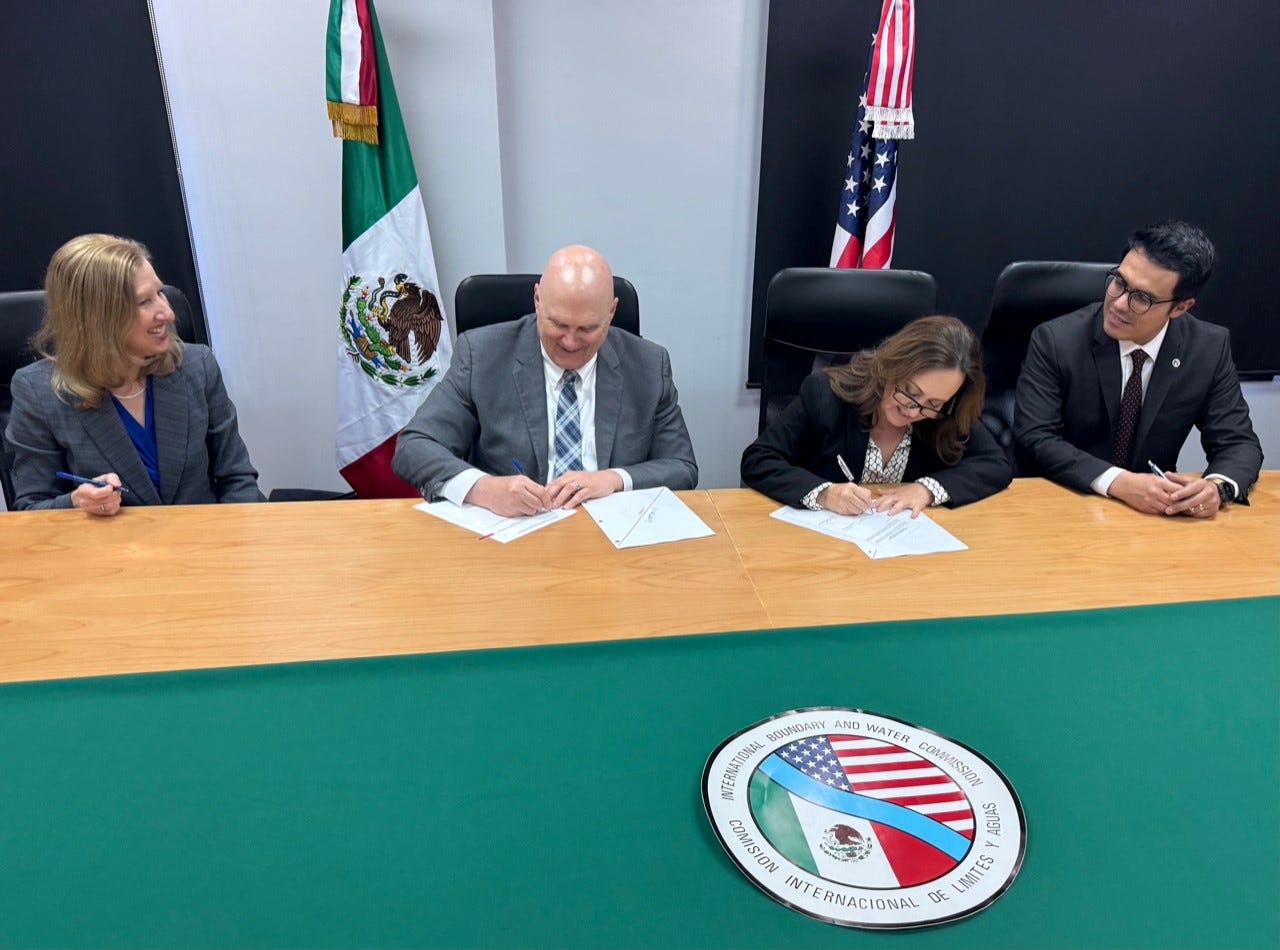
US and Mexican officials signing Minute 333 in Tijuana, Baja California, Mexico, on December 15, 2025. (USIBWC photo)
The Takeaway
This is not a “problem solved” moment. It is a problem moving into a more constructive phase.
Near term, owners and buyers should still expect:
Periodic environmental headlines
Continued monitoring and regulatory attention
Ongoing buyer scrutiny during due diligence
Long term, Minute 333 supports a more favorable base case:
Reduced downside risk tied to unchecked deterioration
Clearer accountability through defined milestones
Better alignment between infrastructure and population growth
Two items worth watching closely are progress on the sediment basin ahead of the 2026–27 rainy season and measurable movement on the Tecolote–La Gloria wastewater treatment plant. Those milestones will matter more than any press release.
Markets do not price optimism quickly. They price certainty slowly.
For years, the Tijuana sewage crisis has been treated as an unsolvable constant. Minute 333 does not erase history, but it changes the forward-looking equation. And in real estate, changes in direction often matter long before the destination is reached.
Thanks for reading! Subscribe for market updates and local insights.